
Daycare Waitlists in the Vancouver Region: When to Get On Them

Ask a Vancouver parent when they joined their daycare waitlist, and the honest answer is often before the baby was born. Newcomers hear this and assume it is local exaggeration, then discover during their first month that every infant room in the neighborhood they wanted already has a list stretching past their child's first birthday. British Columbia's ChildCareBC program has added licensed spaces steadily since 2018, but demand for infant and toddler care in Metro Vancouver still outpaces supply, and the shortage is worst in the neighborhoods newcomers want most.
Daycare registration is one of the few items on a relocation checklist that should not wait for a signed lease, a start date, or a finalized work permit. Here is how BC's child care system fits together, what a space realistically costs by age and city, and the order in which you should be joining waitlists if a child under five is coming with you.
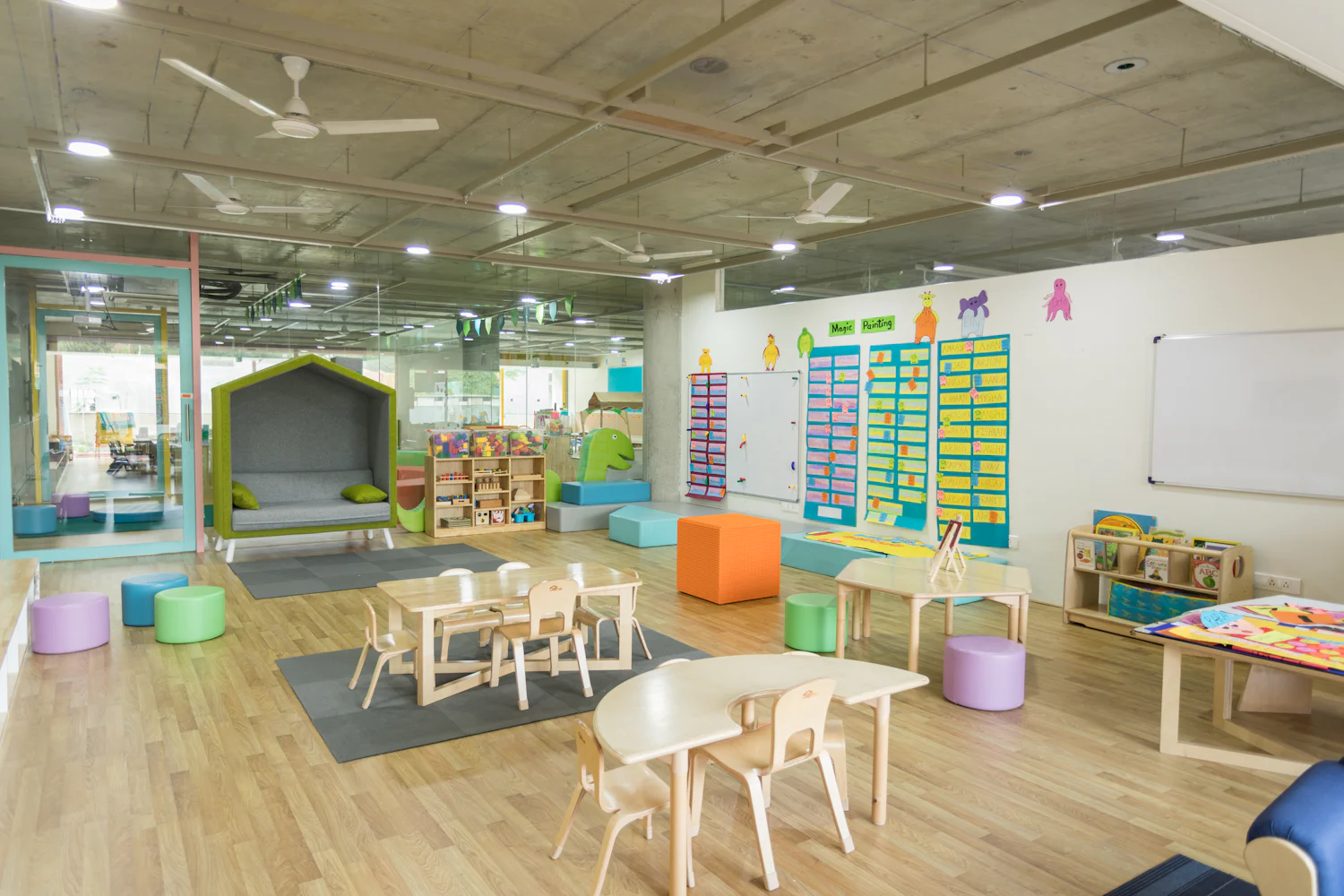
The province's own guidance is blunt about how this works: child care waitlists are set and run entirely by each provider, not by government, and the $10 a Day ChildCareBC centers page tells families it is "a good idea to reach out to your local preferred child care provider to learn how their waitlists work." In practice, position on a list is decided by the date you registered, not by how urgently you need a space or how far along your paperwork is.
That single mechanic is why the standard advice sounds so aggressive: register everywhere you would consider sending your child as soon as a move to Metro Vancouver becomes likely, even without a BC address, a moving date, or an approved permit. Most centers will still take your name and simply update your file later. Waiting until you land puts you months, sometimes over a year, behind families who started before they had a passport stamp.
Newcomers usually arrive having heard one headline fact, that BC has "$10-a-day daycare." That is true only at a specific, limited category of provider. Three separate provincial programs sit behind the headline, and it helps to know which one a provider belongs to before you call.
These three do not combine the way people expect. A $10-a-day center is already at the flat rate, so CCFRI has nothing left to reduce. A CCFRI-participating center still charges its own, lower fee. The ACCB can layer onto nearly any licensed arrangement if your income qualifies. Ask each provider which applies; do not assume.
We handle your MSP, SIN, housing and school search.
Getting your name on a private waitlist rarely requires proof of status; most providers just want a child's name and your contact details. Status starts to matter when you claim public funding.
The Affordable Child Care Benefit's eligibility rules, as of September 2026, require a parent or guardian to be a BC resident and to hold status as a Canadian citizen, permanent resident, Convention refugee or protected person. The application requires the SIN of the parent and their spouse, and if that SIN does not start with a digit from 1 through 7, the ministry asks for supporting documentation of status. Temporary residents, including work permit holders, are issued a SIN starting with 9. Whether a work-permit-holding parent qualifies can depend on the permit's details, so confirm directly with the Child Care Service Centre rather than assuming; this is not something Pacific advises on.
As of October 2026, households earning up to about $111,000 CAD a year may qualify for the Affordable Child Care Benefit, and larger families or families of children with support needs can qualify above that, so apply rather than assume your income disqualifies you. You cannot apply without a SIN, which is one more reason our SIN number application guide belongs on the same early to-do list as your daycare calls.
The most current independent comparison is the Canadian Centre for Policy Alternatives' "The $10-a-day divide: Child care fees in Canada in 2026" (August 2026), which surveyed providers in 35 Canadian cities. BC and Nova Scotia are the only provinces still running a market-fee system rather than a single set rate, making BC's fees the highest in the country and the hardest to predict.
Median infant fees across BC cities ranged from $28 CAD a day in Kelowna to $52 CAD in Richmond, with Vancouver, Burnaby and Surrey between the two. Median preschool-age fees ranged from $24 CAD to $42 CAD. Vancouver is split down the middle: roughly 45 percent of its preschool-age spaces sit at the $10-a-day rate, the highest share in BC, while a quarter of families pay more than $46 CAD a day and the priciest 5 percent pay over $69 CAD. Surrey has far fewer $10-a-day spaces, under 10 percent of the total, and Burnaby's for-profit centers run as high as $80 CAD versus a $42 CAD ceiling among non-profits.
One detail explains why fees keep drifting upward: according to an August 2026 report from the Canadian Centre for Policy Alternatives, BC's flat-rate fee reduction has not increased since December 2022, while the province's 2026/27 fee reduction guidelines still allow centers to raise fees by up to 3 percent of the regional median fee each year, and parents cover the gap. On the upside, the CCPA calculated a genuine $10-a-day maximum would save Vancouver parents of an infant about $648 CAD a month, Richmond parents over $900 CAD, and Burnaby and Surrey parents around $500 CAD.

BC licenses several categories of child care, and Vancouver Coastal Health's licensing pages define each one in plain language.
There is no single citywide daycare registry to sign up for once and forget. The City of Vancouver says directly that it does not manage facilities or maintain waiting lists; enrollment belongs to each operator. Vancouver families are pointed to the Westcoast Child Care Resource Centre's search tool and its list of licensed operators. Burnaby, Richmond, North Vancouver and Surrey each have their own Child Care Resource and Referral service; the province's CCRR directory points you to the right one.
These habits are what usually decide whether a family gets a space:
Keeping five to ten registrations current across Vancouver, Burnaby, Richmond, North Vancouver and Surrey, each with its own referral service, is hard to do from overseas with a day job. That coordination is part of what our settling-in support covers.
Most families relocating with a young child need some kind of bridge between arrival day and the day a licensed space opens up. What that bridge looks like depends on budget and how long the gap runs.
If you are also enrolling an older child in kindergarten, the timing pressure compounds. Our companion piece on enrolling your child in a BC public school covers the same before-you-arrive problem for school-aged siblings, worth running alongside this one.

Working backwards from the day you land, this is the order we suggest:
The sequence is a lot to run in parallel with finding housing, transferring a work permit, and packing up a life, which is why the timeline starts before you book a flight.
If you do one thing this week, put your name down with centers in every neighborhood you are considering, before you have a BC address. Our settling-in team can run those registrations and the follow-up check-ins across municipalities while you handle the rest of the move, so talk to us about getting your daycare waitlist timeline started before you arrive.

Keep reading
Related insights from our team to support your relocation journey.