What Groceries Actually Cost in Portland: A Shopping Cart Breakdown

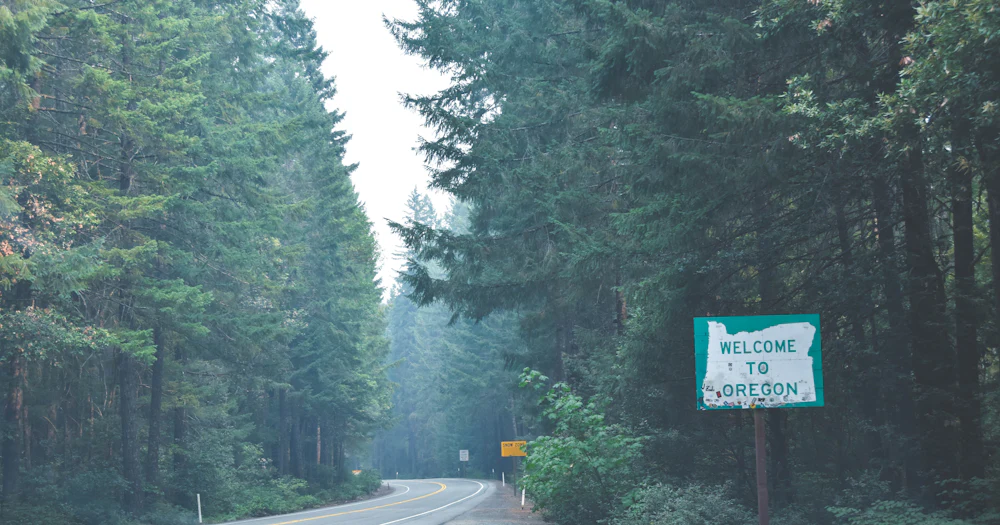
If you're weighing a move to Portland from Seattle, Vancouver, or anywhere else with a line item for tax on the receipt, one fact matters more than any single grocery price: what's on the shelf is what you pay. Oregon is one of only five states with no general sales or use tax, and that single rule reshapes how you shop here, from which stores make sense to how your old grocery budget translates to your new one.
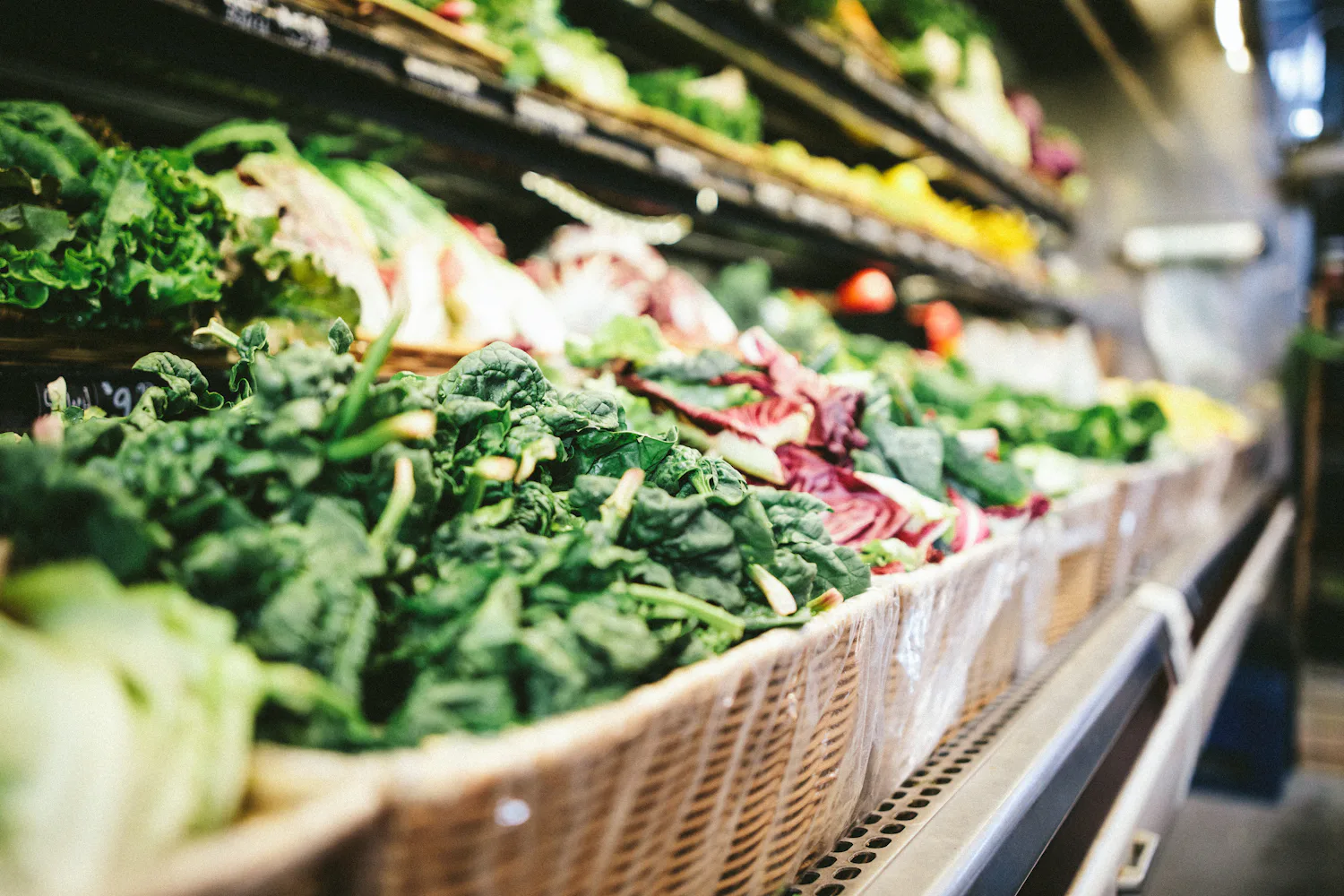
As of September 2026, the ranges below reflect what you'd actually pay across Portland-area Fred Meyer, Safeway, New Seasons Market, WinCo, and Trader Joe's locations, with the low end toward the discount stores and the high end toward the premium ones. None of these numbers carry a cent of sales tax at checkout, which takes some adjusting if you're used to seeing 8-10% added to the taxable items and prepared food on a grocery receipt. Prices below are in USD.
Produce:
Dairy & Eggs:
Proteins:
Pantry Staples:
For a sanity check against the wider region, the Bureau of Labor Statistics' West region price data tracks similar patterns, with Portland running close to the regional average on most staples and a bit above it on specialty and organic items.
Fred Meyer is Portland's default one-stop shop. Owned by Kroger, it pairs a full grocery department with clothing, home goods, and a pharmacy under one roof, which makes it the store most newcomers land at first simply because it's everywhere. Prices sit in the middle of the market, and the weekly digital coupons through the Fred Meyer app are worth clipping before every trip.
Safeway runs a similar mid-tier lane, with a stronger prepared foods counter and a Just for U loyalty program that meaningfully lowers your total if you use it consistently. Expect prices close to Fred Meyer's, occasionally a notch higher on name-brand items.
New Seasons Market is the one Portland grocery newcomers price wrong most often. Founded in Portland in 1999, it built its reputation on local and organic sourcing, a community-feeling shopping experience, and staff who know the produce. On everyday conventional groceries, New Seasons costs less than Whole Foods and runs closer to Safeway with a modest premium, and it only climbs toward Whole Foods territory on specialty and organic-exclusive items. If you dismissed it as "the expensive one" based on reputation alone, it's worth an actual trip before you write it off.
WinCo and Trader Joe's are Portland's main discount options, though they work differently. WinCo is a warehouse-style, employee-owned chain with bulk bins and no-frills aisles, and Portland grocery-price tracker Bryan Vance calls it "the cheapest store in town, week in, week out". The catch: WinCo doesn't accept credit cards at all, only cash, checks, debit, WIC, and EBT, so bring a debit card or cash. Trader Joe's takes a different approach, keeping costs down through private-label products and a limited assortment rather than bulk volume, and it's the better stop for pantry staples, frozen items, and reliably good wine.
Zupan's Markets and Whole Foods anchor the premium end. Zupan's is a smaller, Portland-born neighborhood chain with excellent produce, a real butcher counter, and prices that run noticeably higher than at Fred Meyer or Safeway. Whole Foods sits alongside it for organic depth and prepared foods, at a similar premium. Both make sense occasionally, less so for a full weekly shop on an ordinary budget.
H Mart is worth the drive if you cook Asian cuisine regularly. Produce, seafood, and pantry staples run noticeably cheaper than at conventional supermarkets, and the selection covers ingredients you won't find at Fred Meyer at all. Costco rounds out the list for bulk staples: a membership pays for itself within a couple of months for a couple or family buying proteins, dairy, and coffee in volume, and the Kirkland Signature line holds up well against name brands.

We handle your housing, schools, health coverage and paperwork.
The headline fact is the one already mentioned: Oregon has no statewide sales tax, and Portland adds none of its own, so groceries ring up at shelf price. That's unusual on the West Coast, and it holds at the county level too. Multnomah, Washington, and Clackamas counties, which cover the entire Portland metro, levy no general sales tax of their own; the closest thing in the state is a narrow prepared-food tax in the city of Ashland, nowhere near Portland.
Here's the honest three-city comparison, since it's the number every relocating family actually wants. Raw groceries are tax-exempt in all three cities. Washington exempts unprepared food from its state sales tax, and British Columbia zero-rates basic groceries for GST and PST. So a cart of plain produce, meat, and dairy rings up close to identical in Portland, Seattle, and Vancouver. Where the three cities actually part ways is everything else that lands in a normal week's cart: paper towels, dish soap, a rotisserie chicken, a case of sparkling water, a bottle of wine. In Portland, none of it is taxed, full stop. In Seattle, that non-exempt slice is taxed at a combined 10.55% sales tax rate, in effect since January 1, 2026 and current as of October 2026 (see our Seattle grocery breakdown for the full picture, including the city's beverage tax). In Vancouver, the same items carry 5% GST, and snack foods, soda, and liquor stack BC's PST on top, so a $100 CAD non-exempt basket can run $105-112 CAD after tax (see our Vancouver grocery breakdown) before you even get to the USD-CAD exchange rate. In Portland, the register total is the sum of the shelf prices, plus any bottle deposits.
Oregon's other quirk is the Bottle Bill, the country's oldest container deposit law. Most beverage containers, water, soda, beer, kombucha, hard seltzer, and now canned wine, carry a 10-cent refundable deposit added at purchase (distilled liquor, wine in glass, and dairy or plant-based milk are excluded). You get it back through BottleDrop, Oregon's redemption network: self-serve machines at BottleDrop Redemption Centers that take up to 350 containers per person a day as of October 2026, a Green Bag drop-off system where a filled bag gets credited to your account within a week, or hand-counted returns for up to 50 containers a day. The system takes some getting used to. You'll pay the extra dime at checkout without noticing, then stare at an unfamiliar kiosk wondering why it's rejecting a can, or forget you have an account balance sitting unclaimed. Sign up for a BottleDrop account before your first grocery run and it stops being a mystery.
For a family buying, say, a dozen deposit-eligible containers a week, that's about $1.20 USD added at checkout and $1.20 USD refundable if you actually return them, roughly $60 USD a year either donated to the state's recycling system or recovered as cash, or as 20% more in store credit at participating BottleDrop Plus retailers (as of October 2026). It's a rounding error next to the sales-tax savings, but it's the one line item that puzzles people in week one.
Grocery prices also vary by geography inside the state. Portland proper runs a modest premium over the Willamette Valley towns just outside it, driven by the same commercial-rent pass-through that inflates prices in any dense urban core. If you're still choosing where to live, that's one more variable worth weighing alongside commute time; our guide to choosing your Portland neighborhood by commute time covers the trade-offs in more depth.
Fred Meyer's app, Safeway's Just for U, and New Seasons' rewards program all shave real money off a weekly total if you scan them at checkout every time.
A common Portland pattern: WinCo or Trader Joe's for pantry staples and proteins, H Mart for produce and Asian ingredients, and New Seasons or Fred Meyer for everything else.
Keep a Green Bag by the recycling bin and drop it at a BottleDrop location every couple of weeks, so the deposits come back as a small, routine credit toward your next shop.
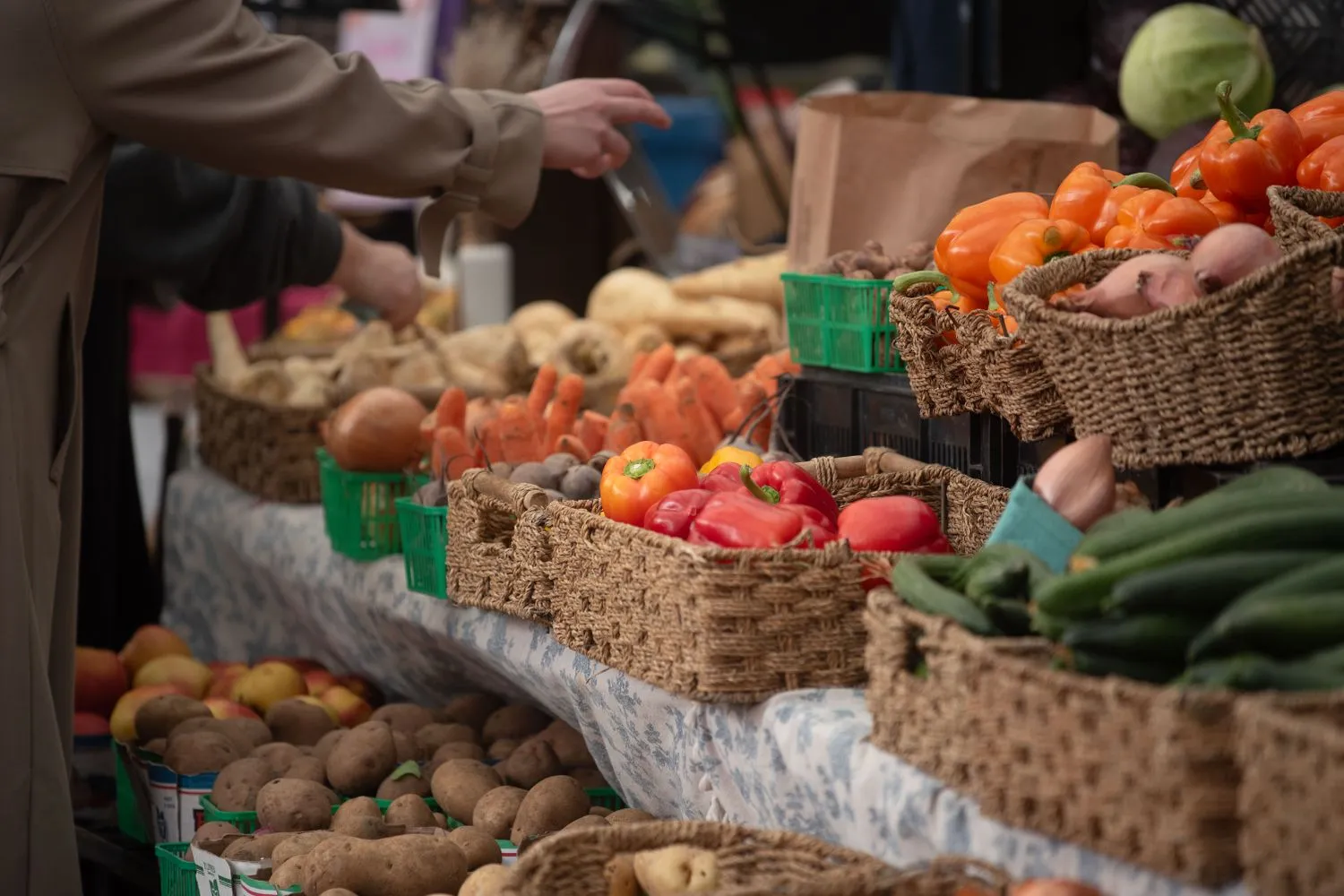
The Portland Farmers Market at PSU runs year-round on Saturdays: 8:30 am to 2 pm through October, then 9 am to 2 pm from November through March (closed December 26, 2026), with about 100 farmers and food vendors at peak season. Portland Farmers Market also runs smaller neighborhood markets at King, Lents, Shemanski Park, and Kenton on other days of the week, so there's usually one within reach no matter where you land.
The Willamette Valley's growing season runs roughly June through September, and that stretch brings better produce prices than winter, when imports dominate. Berry season peaks in July, and the region near Salem grows an estimated 90% of the world's marionberries, so that's the month to buy them by the flat and freeze what you don't eat. Hazelnut harvest follows in the fall; Oregon grows 99% of the country's hazelnut crop, and fresh, cheap hazelnuts show up at farmers markets and grocery bins alike come October.
The trade-off is that Oregon's seasonal swing is sharper than what you'd see moving from Vancouver. The Willamette Valley's warmer, drier summers and colder winters push produce prices further apart between seasons than BC's coastal, moderating climate does. Budget more flexibility into your winter grocery line than you might expect from a milder coastal city.
Realistic weekly grocery budgets in the Portland area, as of September 2026: a single person eating at home most days should plan on $75-110 USD per week; a couple, $140-190 USD; a family of four, $220-320 USD. These bands assume a mix of conventional and occasional premium purchases, not an all-Whole-Foods or all-WinCo cart, and they'll run lower if you lean into the discount stores and higher if New Seasons and Zupan's become your default. Whichever band you land in, it is also your register total: Oregon adds no sales tax, and the only extra at checkout is the 10-cent Bottle Bill deposit, which you get back.
Groceries are only one line in your new Portland budget. If you're also sorting out coverage, our guide to health insurance in Oregon for Portland newcomers walks through that piece separately.
The practical next step is to price your usual cart at the Fred Meyer, WinCo or New Seasons nearest the neighborhood you're considering, and to set up a BottleDrop account before your first shop. Our settling-in support covers that first month on the ground, and you can talk to us about setting up your first month's budget in Portland.

Keep reading
Related insights from our team to support your relocation journey.