What Groceries Actually Cost in Seattle: A Shopping Cart Breakdown
In Seattle, a rotisserie chicken from the deli counter and the same raw chicken from the meat case ring up under different tax rules: groceries are largely exempt from sales tax, and prepared food is not. Washington has no personal income tax for the vast majority of residents (a new state tax on individual income above $1 million takes effect in 2028, well outside what almost any new arrival needs to plan around), which sounds like a win until you look at the receipt: the state leans hard on sales tax instead, and Seattle stacks its own local rate on top of the state's.
As of September 2026, a single person eating at home most days should budget $70-100 per week in USD. A couple typically spends $140-180 per week, and a family of four runs $260-340 per week. These bands come from the online prices QFC and Fred Meyer list for their Seattle stores, plus the prices Trader Joe's shows on its website, cross-referenced with the Bureau of Labor Statistics' West region average price data as a sanity check. Prices below are in USD. Treat every figure below as a representative, date-stamped estimate rather than a guaranteed price. Store, brand, and week-to-week promotions all move the number.
Produce:
Dairy & Eggs:
Proteins:
Pantry Staples:
If you're comparing with Vancouver, the Vancouver grocery cart breakdown uses the same four categories.
QFC, a Kroger-owned chain, is Seattle's most convenient in-city option, with stores in nearly every dense neighborhood. That convenience carries a real cost. QFC and Fred Meyer are both owned by Kroger, but they don't charge the same: in Puget Sound Consumers' Checkbook's latest price survey (updated November 2025), Fred Meyer came in about 10% below the area average, while QFC was 1% to 6% above it. It's worth checking whether a Fred Meyer sits within a reasonable bus ride before defaulting to your nearest QFC.
Fred Meyer, also Kroger-owned, runs larger suburban-format stores that mix groceries with general merchandise. Prices routinely undercut QFC on the same products, sometimes by a wide enough margin that a 20-minute bus ride pays for itself on a full cart.
Safeway and Albertsons, now under common ownership, sit in the middle tier: solid produce and a workable loyalty app, priced a notch above the discount chains.
Trader Joe's earns its reputation on private-label pricing for staples like frozen produce, cheese, and snacks, though it isn't built for a full weekly shop since it skips many fresh-meat and household categories entirely.
PCC Community Markets, a member-owned cooperative with roots in Seattle going back to the 1950s, leans organic and local, and prices reflect that; it suits shoppers prioritizing sourcing over cost, and membership isn't required to shop there, only to earn the member discount days.
Whole Foods anchors the premium end, particularly for prepared foods and specialty diets, and an Amazon Prime membership unlocks additional in-store discounts.
WinCo Foods keeps prices lowest through a genuinely bare-bones model: no membership fee, but also no credit cards accepted, only cash, debit, checks, and EBT. Bring a debit card or cash, not a rewards credit card, and expect to bag your own groceries.
H Mart and Uwajimaya are the region's major Asian grocery chains, with Uwajimaya's flagship store anchoring Seattle's Chinatown-International District. Both undercut conventional supermarkets substantially on produce, seafood, and pantry staples relevant to Asian cooking.
Costco membership pays for itself quickly for a couple or family through bulk staples, and the Costco Business Center in Lynnwood, open to all members despite the name, stocks case-pack sizes and food-service items at better per-unit pricing than a standard warehouse.
We handle your license, bank account, SSN and housing.
Washington's sales tax rules for food split the grocery cart into taxed and untaxed items. Most grocery-type food and food ingredients are exempt from state sales tax, but "prepared food," soft drinks, and dietary supplements are not. Prepared food generally means anything sold heated, anything combining two or more ingredients into a single item, or anything sold with a utensil. That rotisserie chicken from the deli counter gets taxed; the same raw chicken from the meat case doesn't. It's also why a hot bar plate at Whole Foods or PCC rings up like a restaurant meal even though it's sold inside a grocery store: heated, combined, ready to eat with a fork counts as prepared food under state rules no matter which aisle it comes from. The same logic runs the other way at a corner mini-mart: if a store makes utensils available and more than 75% of its food sales are prepared food, the Department of Revenue treats all of its food as prepared food, so even a plain bag of chips that would be exempt at a full grocery store gets taxed. The one exception is food packaged as four or more servings, as long as no utensil comes with it. As of October 2026, the combined sales tax rate in Seattle is 10.55%, made up of the state's 6.5% and Seattle's 4.05% local rate, so that distinction matters more here than almost anywhere else on the West Coast.
Seattle's minimum wage is the second cost driver. It rose to $21.30 an hour as of January 1, 2026, among the highest municipal minimum wages in the country, and grocery, retail, and food-service labor costs feed directly into shelf prices in a city where a large share of the workforce is paid near that floor.
Then there's the city's own surcharge: the Seattle sweetened beverage tax, in effect since 2018. Distributors pay 1.75 cents per ounce on sodas and other sweetened drinks (a reduced 1 cent per ounce applies to certain mid-sized manufacturers, and small manufacturers under $2 million in worldwide revenue are exempt), and that cost is passed through at the register. On a 2-liter bottle, that works out to roughly $1.18 in tax alone before any markup, which is why a case of soda in Seattle can cost noticeably more than the same case just outside city limits.
Finally, expect a dense-urban premium at any in-city store versus a suburban or big-box location. Commercial rent in Seattle's core neighborhoods gets passed through in pricing, which is exactly why the QFC-versus-Fred-Meyer gap described above is worth planning around rather than shrugging off.
If you're arriving from Canada, you may already know the reverse trip: driving south to Bellingham or Blaine for cheaper staples and gas, then tracking your personal exemption limits with the CBSA on the way back. If cross-border grocery runs are part of your planning either direction, confirm current exemption thresholds before you load the trunk.
QFC, Fred Meyer, and Safeway all run digital coupon programs through their apps that meaningfully undercut shelf price, and Fred Meyer and QFC both link to Kroger's Fuel Points program for gas discounts. Skipping the app leaves real money on the table.
WinCo's bulk bins, covering grains, spices, dried fruit, and baking staples by weight, are the store's best value, letting a single person buy exactly the quantity needed instead of a fixed package size.
Uwajimaya and H Mart both carry conventional staples alongside their produce, seafood, and Asian pantry items, so a single trip can cover more of the list than the name suggests.
For a larger household, the Lynnwood Business Center described above is worth the drive for staples like eggs, oil, and frozen proteins.
Flashfood partners with Fred Meyer and QFC locations around Seattle to sell meat and produce nearing its sell-by date at roughly half off, and Too Good To Go covers surplus bakery and prepared-food items from local bakeries and cafes. Neither replaces a full weekly shop, but both trim a real amount off a monthly total.
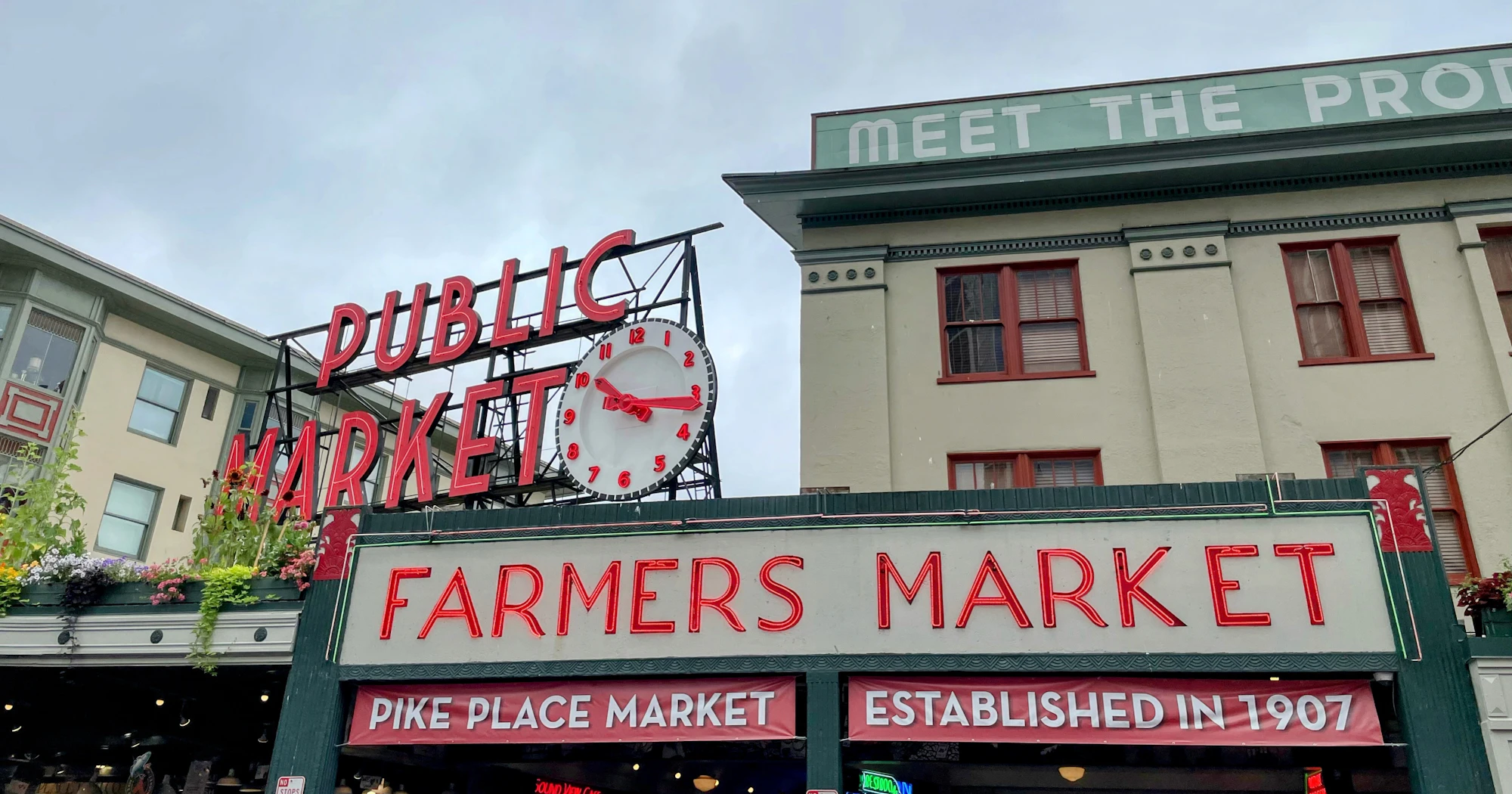
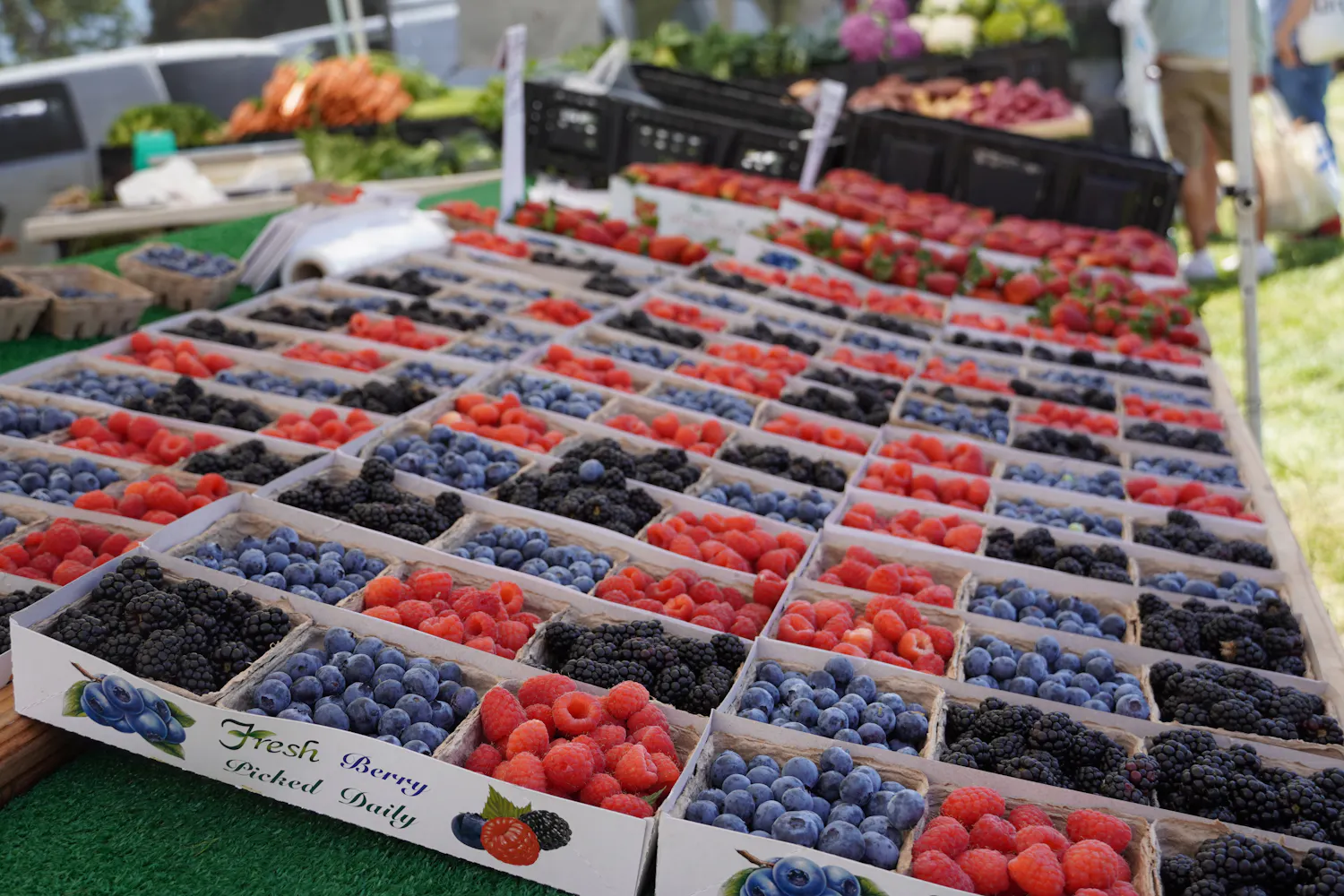
Seattle's farmers markets run deeper into the calendar than many newcomers expect. The Pike Place Market farm tables operate year-round, while the neighborhood markets, Ballard, Fremont, and the University District, run weekly all year, not just in summer. Prices at all of them climb in winter and ease from June through September as Washington's own harvest comes in. Skagit Valley berries and Yakima Valley stone fruit and sweet corn hit their stride by midsummer, and stall prices on all three routinely undercut supermarket produce sections during peak weeks. Winter flips the equation: expect more imported produce at the supermarket, and lean on root vegetables, winter squash, and storage apples, which hold their price and quality far better than out-of-season tomatoes or berries shipped in from elsewhere.
Salmon is the clearest seasonal swing in the whole basket. Early-season Copper River salmon, the first sockeye and king runs of the year, arrives at Pike Place Fish Market in May at eye-watering opening prices driven as much by marketing as scarcity. By midsummer, as more runs come in from Washington and Alaska waters, wild salmon prices ease noticeably, and farmed Atlantic salmon stays available and comparatively affordable year-round for anyone not chasing a specific wild run.
The cost of groceries in Seattle comes down to a few rules worth learning in your first month: buy raw ingredients instead of prepared food where you can, know which store tier you're standing in, and treat the bus ride to a Fred Meyer or a trip to WinCo as a real budgeting decision rather than an inconvenience.
Realistic monthly grocery budgets, based on the weekly figures above: a single person should plan on $300-430 per month, a couple on $600-780, and a family of four on $1,120-1,470. Add roughly 10.55% at checkout for anything that doesn't qualify for the grocery exemption, and budget separately for soda and sweetened drinks given the beverage tax. Those numbers assume cooking at home most nights; Seattle's restaurant prices run high enough that the gap between eating in and eating out here is wide, which makes the store-tier decisions above worth getting right.
Getting your bearings on where to live matters here too, since your grocery routine follows your commute. Our guide to choosing your Seattle neighborhood by commute time covers which areas put you near a Fred Meyer or WinCo rather than only an in-city QFC, and our piece on health insurance options in Washington State is worth reading alongside this one as you build out a full first-month budget.
The practical next step is to price your usual cart at the Fred Meyer, WinCo or QFC nearest the neighborhood you're considering before you sign a lease, so your grocery budget is built on the stores you will actually use. Our settling-in support covers that first month on the ground, and you can talk to us about setting up your first month's budget in Seattle.

Keep reading
Related insights from our team to support your relocation journey.