Opening Your First Canadian Bank Account: Required Documents
.webp)
Setting up a Canadian bank account is one of the first practical steps after you arrive, and getting it right from the start saves you time and frustration later. Know what documents to bring to your first appointment, whether you're settling in Vancouver, Victoria, or elsewhere on the West Coast, and the process is straightforward.
A Canadian bank account is essential for daily life here. You'll need it to receive your salary, pay rent, build credit history, and access services that don't accept foreign accounts. Many landlords won't consider a rental application without a Canadian banking reference, and employers typically require direct deposit into a domestic account.
Canadian banks are used to working with newcomers. Most major institutions have dedicated newcomer programs with advisors who understand what you're dealing with.

Canadian banks operate on what's commonly called the two-point identification system: you present two separate pieces of ID that together verify your identity and your Canadian residential address.
Your primary ID must be a government-issued document with your photograph. For most newcomers, this will be:
For most newcomers, that's a valid, unexpired passport, the most widely accepted option. If you're a permanent resident, your Confirmation of Permanent Residence (COPR) document or PR card works just as well.
A Canadian driver's license also qualifies as primary ID, though most people open their account before they've gotten one, so don't rush the licensing process just for banking. Recently naturalized citizens can use their citizenship certificate or card. Work permit holders should bring their valid work permit; study permit holders can use their study permit.
This is where newcomers often hit a roadblock: standard secondary IDs assume you've already been living in Canada for a while, and banks want a document that confirms your Canadian address.
Acceptable secondary documents include a Canadian credit card, a Canadian driver's license (if not used as primary ID), a confirmation Social Insurance Number (SIN) letter, or a citizenship certificate (if not used as primary ID). For proof of address, banks accept a utility bill in your name, a lease or rental contract, a property tax assessment, a recent statement from another Canadian bank, or a government-issued document showing your Canadian address.

Most Canadian banks have exceptions for newcomers who don't have secondary ID or proof of address yet. If you've just arrived and don't have those documents, banks can often work with what you do have.
Many institutions accept a letter from your employer confirming your address and start date. If you're staying with friends or family, a letter from them confirming your residence, along with their proof of address, can work too. Your signed lease is usually sufficient even if utilities aren't in your name yet.
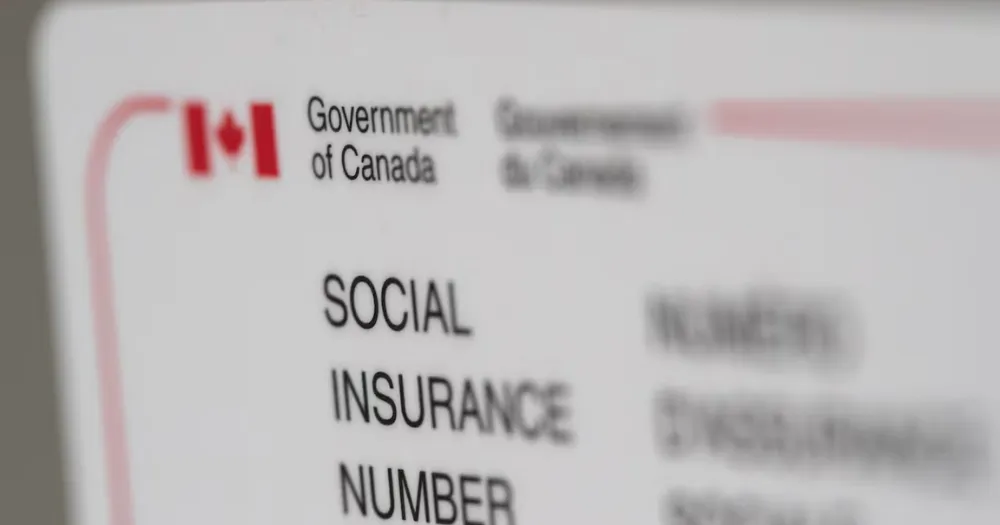
Your Social Insurance Number (SIN) needs special attention. You can technically open a basic account without one, but you'll face real limits: without a SIN, banks can't pay you interest, and you won't be able to open certain accounts or access some products.
You can open an account and add your SIN later once Service Canada issues it. Most banks flag your account as "SIN pending" and update it once you bring in the nine-digit number. That means you don't have to wait for banking services, but get your SIN within your first few weeks.

Bringing extra documentation isn't required, but it helps. An employment letter showing your job title, salary, and start date gives the bank a clearer read on your finances. If you've sold property or are depositing significant funds, bring documentation showing where the money came from; Canadian banks take anti-money laundering rules seriously.
If you're arriving through a company transfer, a letter from your international employer strengthens your application. Students should bring their acceptance letter from their Canadian school. The more documentation you bring, the better the advisor can recommend the right products.
Not all banks offer the same experience for newcomers. The Big Five Canadian banks, RBC, TD, Scotiabank, BMO, and CIBC, all have dedicated newcomer programs with benefits like waived monthly fees for the first year, free international money transfers, and specialized advisors.
Credit unions, especially popular in British Columbia, often give more personalized service and more flexibility on documentation, though they typically have smaller branch networks. Online banks like Tangerine and Simplii offer no-fee banking but require more self-service, which can be a challenge while you're still learning the system.
Book your appointment in advance rather than walking in, so you get someone with time to explain your options properly. The appointment typically takes 45 minutes to an hour.
Bring all your original documents; banks won't accept photocopies for identification, the advisor makes copies themselves. They'll ask about your financial needs, employment, and plans in Canada. That's not an interrogation, it's how they figure out which products to recommend.
You'll likely walk out with a chequing account, a savings account, a debit card (which may arrive by mail in 7-10 days), and possibly a credit card application in progress. Many newcomer programs offer secured credit cards, which let you start building Canadian credit history right away.

Opening your first Canadian bank account is your entry point into financial life here. With the right documents and a clear sense of what banks need, you can get this done within a week of arrival.
Preparation is what matters most: gather your documents before you arrive if possible, book your appointment for the first week, and ask questions. Canadian banking advisors work with newcomers all the time and want to get you set up.
Once your account is active, everything else, automatic rent payments, your first paycheck, gets easier. This one step opens the door to housing, employment, and the financial stability that makes your move smoother. Contact us at Pacific Relocation to get started.

Keep reading
Related insights from our team to support your relocation journey.